

WhatsApp:
+8613723476882
E-mail:
E-mail:
A1213 Niulanqian Mansion, Minzhi Blvd, Longhua District, Shenzhen City, Guangdong Province, China
Views: 0 Author: Site Editor Publish Time: 2026-10-31 Origin: Site


Extreme ocean pressure does not forgive design flaws. Deploying uncertified infrastructure leads directly to housing breaches, massive financial losses, and severe legal penalties. The subsea environment is characterized by crushing hydrostatic pressure, aggressive galvanic corrosion, and unpredictable hydrodynamic forces. In this operational reality, equipment failure is simply not an option.
Navigating maritime laws, strict environmental regulations, and technical certifications solves this critical compliance problem. In this engineering guide, you will learn the exact global, regional, and technical approvals required for deep-sea deployments. We cover compliance frameworks for power modules, data transmission hardware, and integrated controllers to ensure your next offshore project is legally sound and structurally bulletproof.
Subsea power modules require a stringent combination of technical certifications—such as DNV and IEC—and environmental approvals before any offshore deployment.
Integrating power delivery and data transmission into a single subsea umbilical demands rigorous Electromagnetic Compatibility testing and hyperbaric pressure validation.
A reliable power supply forms the backbone of the offshore energy transition, requiring strict adherence to international safety and quality standards to prevent operational downtime.
Internal components must undergo specific Mean Time Between Failures evaluation and environmental stress testing to achieve industry-standard regulatory approvals.
Consider the operational reality of deploying a subsea production tree. If a power conversion module fails due to water ingress at 3,000 meters below the surface, intervention requires mobilizing a specialized offshore vessel, deploying Remotely Operated Vehicles, and halting production. Industry data consistently indicates that subsea interventions to repair or replace failed components cost millions of dollars per incident. This does not even factor in the revenue lost during operational downtime. Strict certification processes act as the primary risk mitigation strategy, ensuring that every housing, seal, and connector is engineered to survive its intended design life.
Offshore infrastructure—ranging from oil and gas manifolds to floating wind substations—relies entirely on uninterrupted electrical power. Certifications guarantee that modules can withstand deep-water environments through comprehensive hyperbaric testing, which simulates the crushing pressures of the ocean floor. By passing these rigorous physical tests, manufacturers prove that their modules resist structural collapse. This directly ensures a reliable power supply to mission-critical subsea infrastructure under all anticipated operational conditions.
Beyond technical reliability, certifications are a fundamental commercial requirement. Project financiers, stakeholders, and marine insurance companies will not underwrite offshore projects without undeniable proof of compliance. Recognized approvals from classification societies provide the necessary assurance that the equipment meets global safety and performance benchmarks. Without these critical stamps of approval, securing project funding or insurance coverage is virtually impossible. Underwriters demand empirical evidence that subsea assets are protected against foreseeable marine hazards.
Det Norske Veritas—widely known as DNV—is recognized as the gold standard for maritime and subsea equipment certification. For subsea power modules and offshore wind cables, DNV provides comprehensive recommended practices, such as DNV-RP-F401 for submarine power cables. Achieving this certification involves exhaustive design reviews, material structural analyses, and physical testing witness programs. Ultimately, this approval signifies that the equipment has been validated by an independent, globally trusted authority for long-term seabed deployment.
The International Electrotechnical Commission sets the global standards for electrical safety, performance, and testing. For subsea power modules, standards such as IEC 61886—which governs subsea equipment and wet-mate connectors—are absolutely critical. These frameworks dictate how electrical insulation must perform under extreme hydrostatic pressure and how modules must manage thermal dissipation in cold underwater environments. Compliance with these standards ensures that internal electrical systems will not short-circuit, degrade, or present safety hazards over their 25-year operational lifespan.
Originally developed for the oil and gas sector but widely adapted across modern subsea engineering, API 17F is the definitive standard for Subsea Production Control Systems. This standard heavily influences how power and data modules are manufactured, assembled, and tested. Specifically, API 17F requires extensive qualification testing, including vibration, shock, and thermal cycling. This ensures that control modules operate flawlessly in harsh subsea conditions.
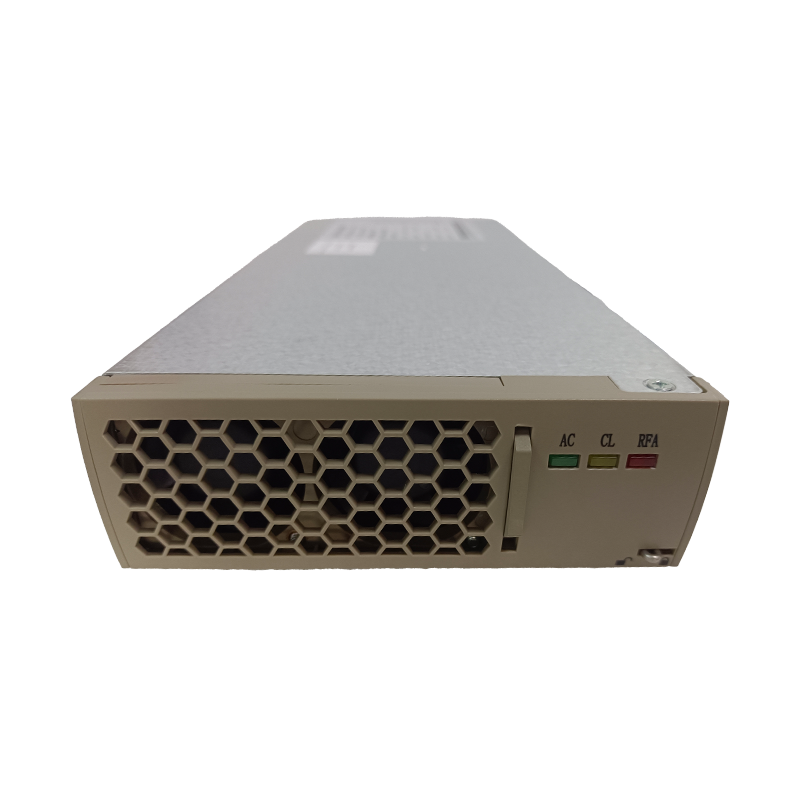
Theoretical compliance is meaningless without field-proven hardware. Modern subsea engineering requires components that exceed baseline regulatory minimums. For instance, an advanced High-voltage AC-DC module like the EVR800-3500 series must handle up to 800V DC input and deliver a stable 3500W output while surviving 3,000-meter depth ratings. Achieving this level of certification requires specialized potting compounds that resist thermal runaway under extreme hydrostatic loads. Engineers must verify that the internal transformer coils do not suffer from partial discharge when subjected to 300 atmospheres of pressure.
Certification Standard | Primary Focus Area | Testing Requirements | Typical Application |
|---|---|---|---|
DNV-RP-F401 | Structural & Marine Integrity | Hyperbaric crush, material fatigue, corrosion resistance | Subsea housings, power cables |
IEC 61886 | Electrical Safety & Insulation | Dielectric withstand, thermal dissipation, short-circuit | Power modules, wet-mate connectors |
API 17F | Control System Reliability | Vibration, thermal cycling, shock testing | Industrial controllers, telemetry units |
CISPR / IEC 61000 | Electromagnetic Compatibility | Radiated emissions, signal interference immunity | Integrated power and data umbilicals |
When deploying subsea infrastructure within domestic waters, compliance with national environmental agencies is strictly enforced. In the United States, the National Oceanic and Atmospheric Administration heavily regulates submarine deployments to protect fragile marine ecosystems. Approvals ensure that the installation and continuous operation of power modules will not disturb benthic habitats, coral reefs, or protected marine sanctuaries. Similar governing bodies exist globally, enforcing rigid spatial and ecological guidelines.
Before any subsea module is approved for deployment, operators must submit a comprehensive Environmental Impact Assessment. This document must empirically prove that the equipment is environmentally inert. Engineers must validate that the module housing will not leak toxic dielectric fluids or heavy metals into the water column. In addition, the assessment addresses the emission of Electromagnetic Fields generated by high-voltage power transmission. Operators must prove these localized fields will not disrupt the navigational systems of marine life, such as sharks and migratory whales.
For communication lines and power grids that cross international borders or traverse the high seas, the United Nations Convention on the Law of the Sea provides the overarching legal framework. While this convention grants nations the right to lay submarine cables on the continental shelf, it also mandates that such deployments respect the rights of other states and actively protect the marine environment. Navigating these rules requires complex legal approvals, especially when integrating multi-national offshore wind grids.
Modern subsea infrastructure increasingly relies on integrated modules that house both high-voltage power components and sensitive data transmission equipment. However, the engineering challenge of co-location is immense. Running high-voltage alternating current alongside delicate fiber-optic or copper data lines creates a severe risk of electromagnetic interference. Certifying these integrated modules requires proving that power conversion processes will not induce noise or corrupt the telemetry streams critical for subsea control.
To achieve regulatory approval, integrated modules must undergo rigorous Electromagnetic Compatibility testing. This validation ensures that high-power components do not emit interference that could jam or disrupt co-located data systems. Furthermore, this testing confirms that the equipment remains immune to external electrical noise generated by nearby subsea machinery like massive seabed pumps or drilling rigs. Passing standard protocols, such as the CISPR and IEC 61000 series, is a non-negotiable engineering step.
The control unit serves as the central nervous system of any subsea module. It is responsible for routing power, executing safety shutdowns, and processing telemetry data. To achieve certification under standards like API 17F, an Industrial Controller must pass a distinct set of environmental and electronic stress tests. Because these controllers operate within sealed, pressurized enclosures, they lack traditional convective cooling. Therefore, approvals require proof that internal heat sinks can dissipate thermal loads without exceeding the maximum junction temperatures of the internal electronics. Building on this, sweeping sine and random vibration profiles are applied to ensure that solder joints and printed circuit boards do not suffer fatigue failures during vessel deployment.
Data transmission in a marine environment is notoriously difficult. Unlike terrestrial wireless networks, Underwater Communication Systems face unique physics-based challenges. These include signal attenuation, multipath interference, and scattering caused by suspended particulates. Certifications for these systems require extensive validation of signal clarity, latency, and maximum transmission range. Acoustic systems are tested for performance in highly pressurized, noisy environments. Conversely, optical systems must prove their lens integrity and low attenuation rates in murky water conditions inside specialized hyperbaric chambers.
The subsea engineering landscape is undergoing a rapid transformation, heavily influenced by the global energy transition. Industry data shows a massive shift toward all-electric subsea production systems. By eliminating legacy hydraulic control fluids, operators reduce environmental risks and improve response times. However, this electrification demands significantly higher power density at the seabed, pushing regulatory bodies to draft stricter thermal management and electrical insulation standards.
Furthermore, the exponential growth of deepwater floating offshore wind introduces dynamic cable challenges. Unlike static seabed cables, dynamic export cables face continuous mechanical fatigue from wave action. Regulators are currently updating DNV guidelines to mandate advanced bend-stiffener reliability tests. Simultaneously, artificial intelligence is reshaping compliance. Future approvals will likely require built-in autonomous diagnostic systems that continuously monitor vibration anomalies and internal humidity, shifting the industry from periodic ROV inspections to real-time, data-driven compliance verification.
When planning a subsea project, engineering teams must decide between utilizing pre-certified equipment or developing custom modules from scratch. Developing custom solutions tailored to highly specific operational needs requires guiding the product through the entire certification lifecycle. This involves funding independent testing and hyperbaric chamber rentals, which easily adds 12 to 24 months to the deployment schedule. In contrast, sourcing pre-certified power modules drastically accelerates project timelines and significantly reduces the financial burden of third-party testing.
Regulatory bodies operate on strict quality assurance principles. They do not merely test the final product; they audit the entire manufacturing lifecycle. Achieving approval requires maintaining an unbroken paper trail throughout production. This includes material traceability certificates, welding inspection reports, and non-destructive testing documentation. During regulatory audits, the inability to produce this traceability matrix instantly halts the certification process.
Subsea power modules are highly engineered assets that demand rigorous testing protocols and strict DNV, IEC, and environmental approvals to ensure continuous functionality. A reliable power supply and robust data transmission network depend entirely on proper certifications that validate mechanical and electrical resilience under extreme ocean pressures. Navigating this regulatory labyrinth requires precision, comprehensive documentation, and strategic vendor partnerships.
If you are looking to mitigate regulatory risks and accelerate your deployment timelines, explore the proven technology at Full Depth ROV. Our engineering team provides fully compliant, pre-certified subsea power module solutions and communication systems designed to withstand the harshest marine environments without compromising performance.
The timeline typically ranges from six to eighteen months. It depends heavily on the complexity of the module, the availability of testing facilities, and whether the equipment relies on novel technology that requires customized testing frameworks from the ground up.
Yes. Deep-water deployments require exponential increases in hyperbaric testing standards to validate structural integrity against crushing pressures. Conversely, shallow-water deployments often face much stricter environmental and domestic regulations due to their proximity to sensitive coastal ecosystems and commercial fishing zones.
Yes, provided the integrated system passes rigorous Electromagnetic Compatibility testing. The design must utilize proper physical shielding and thermal management to ensure the high-voltage components do not create electromagnetic interference that disrupts the sensitive data processing of the controller.
The association provides industry-leading guidelines for the routing, installation, and protection of submarine cables. While not a regulatory body itself, their best practices often serve as the technical baseline for international legal approvals, insurance underwriting, and environmental impact assessments.
Deep-sea equipment requires an IP69K equivalent or higher, often categorized under specialized subsea pressure ratings rather than standard IP codes. The equipment must be hermetically sealed to prevent any water ingress under extreme hydrostatic pressure, typically validated by hyperbaric chamber testing to the specific depth rating plus a safety margin.
Hyperbaric testing places the power module inside a specialized water-filled pressure vessel. Engineers artificially increase the pressure to simulate the exact depth of the ocean floor where the equipment will operate. This validates the structural integrity of the housing, the reliability of the O-ring seals, and ensures internal electronics do not fail under physical compression.


