

WhatsApp:
+8613723476882
E-mail:
E-mail:
A1213 Niulanqian Mansion, Minzhi Blvd, Longhua District, Shenzhen City, Guangdong Province, China
Views: 0 Author: Site Editor Publish Time: 2026-10-27 Origin: Site


Operating machinery on the ocean floor is brutal. It remains one of the most challenging engineering feats imaginable. A single slip or loss of traction can instantly halt a multi-million-dollar subsea project. Equipment gets stuck. It slips on steep inclines. It causes massive turbidity. Why does this happen? Operators frequently utilize the wrong track grip for their specific benthic environment.
Matching the exact track grip to the seabed type is the ultimate solution to these mobility issues. Whether you need grousers, cleats, or specialized pads, your traction system dictates your success. This comprehensive guide helps buyers, field engineers, and project managers choose the perfect track configuration for their next Industrial ROV mission. You need your heavy machinery to dominate the ocean floor, not sink into it.
Key Takeaways:
Traction is Environment-Dependent: There is no universal track grip. Sand requires maximum flotation, mud demands a deep bite, and rock necessitates high-friction durability.
Ground Bearing Pressure Matters: The structural design of your mobility system must perfectly balance the submerged weight of the vehicle with the surface area of the track to prevent catastrophic sinkage.
Customization Drives Profitability: Equipping subsea vehicles with the correct track profile drastically reduces project downtime, minimizes environmental disruption, and lowers long-term maintenance costs.
Material Selection is Crucial: Choosing between hardened steel cleats, heavy-duty rubber pads, or marine-grade polyurethane tracks depends entirely on the hardness and abrasiveness of the target substrate.
When deploying heavy machinery into the abyss, operators obsess over hydraulic horsepower, high-definition camera resolution, or manipulator arm lifting capacity. However, without adequate traction, even the most technologically advanced subsea equipment becomes a stationary, expensive liability. The track grip serves as the vital single point of contact between your capital investment and the unpredictable benthic terrain.
Recent industry analyses highlight a massive shift in offshore equipment procurement. Driven by the global surge in offshore wind farm installations and deep-sea mineral exploration, contractors are rapidly abandoning rigid, single-purpose crawlers. The market trend now heavily favors highly adaptable, modular drive units capable of traversing diverse underwater topographies. Furthermore, strict environmental regulations mean minimizing seabed footprint is no longer just an operational bonus; it is a critical compliance metric. Traction versatility directly impacts offshore project profitability.
Subsea traction operates under a vastly different set of physical laws compared to terrestrial earthmoving machinery. On land, gravity provides a robust downward force, creating natural friction between steel tracks and dirt. Underwater, buoyancy drastically alters this equation. Displaced water reduces the effective weight of the vehicle. This consequently diminishes the normal force pressing the tracks into the seabed.
In addition, the drive mechanism must constantly fight against external hydrodynamic forces. Strong ocean currents create lateral drag. The thick density of seawater inherently resists forward momentum. If the traction coefficient provided by the track pads is lower than the combined forces of drag and operational resistance, the tracks will simply spin in place. Engineers must calculate the precise drawbar pull required and select a track profile engineered to generate sufficient shear strength against the specific seabed material.
Selecting an inappropriate track configuration leads to severe operational and financial consequences. Imagine deploying a heavy-duty crawler equipped with flat rubber pads into a deep-mud basin. Within minutes, the vehicle will lose all traction, slip laterally, and begin to sink into the cohesive silt.
Extracting a bogged-down machine requires deploying secondary recovery vehicles. This easily costs tens of thousands of dollars per day in vessel standby time. Furthermore, rapidly spinning tracks create excessive turbidity. Stirring up the seabed creates a localized white-out effect, completely blinding the sonar and camera systems of the vehicle. Operations are forced to halt until the sediment finally settles. In ecologically sensitive zones, tearing up the seabed due to poor traction triggers severe regulatory fines and immediate project cancellations.
Before ever selecting a track grip, project managers must conduct a thorough geotechnical survey of the operational area. Seabed compositions vary wildly. Understanding the physical properties of the substrate is the absolute first step in optimizing underwater mobility.
Picture a coastal surf zone. The sandy substrate appears stable, yet it is composed of loose, non-cohesive particles highly prone to shifting under heavy vibration. When a multi-ton crawler rolls over this terrain, the localized pressure can cause liquefaction. This turns solid ground into a treacherous, fluid-like slurry. Traction here relies entirely on maximizing surface area rather than deep penetration.
Mud and clay are highly cohesive soils with extremely low load-bearing capacities. This makes them notoriously difficult for subsea mobility. The top layers are often suspended in a semi-liquid state. Consequently, the tracks must actively dig through this soft upper layer to find a firmer, compacted substrate beneath. Silt is particularly problematic because it easily packs tightly into the crevices of mechanical components, reducing mechanical friction to near zero.
Rocky seabeds present a completely different engineering hurdle. These surfaces are unyielding, highly abrasive, and often feature steep inclines, sharp drop-offs, or jagged coral formations. Traction cannot be achieved by sinking into the material. Instead, it requires either slightly fracturing the surface to create mechanical anchor points or utilizing high-friction materials that mold to the micro-texture of the wet rock.
Many complex subsea projects cross multiple geological zones in a single run. An offshore inter-array cable laying vehicle might start in sandy shallows, transition through a muddy basin, and end on a rocky granite reef. These transitional terrains require versatile track configurations or modular systems capable of handling wildly varying degrees of shear strength and abrasion.
Seabed Type | Primary Characteristic | Main Mobility Challenge | Ideal Grip Approach |
|---|---|---|---|
Sand | Loose, shifting particles | Sinking, rapid liquefaction | High flotation, low pressure |
Mud/Silt | Cohesive, low bearing capacity | Track packing, zero friction | Deep penetration, self-cleaning |
Rock | Hard, abrasive, uneven | Sliding, rapid component wear | High friction, surface anchoring |
Mixed | Variable substrate | Unpredictable traction loss | Modular or hybrid track pads |
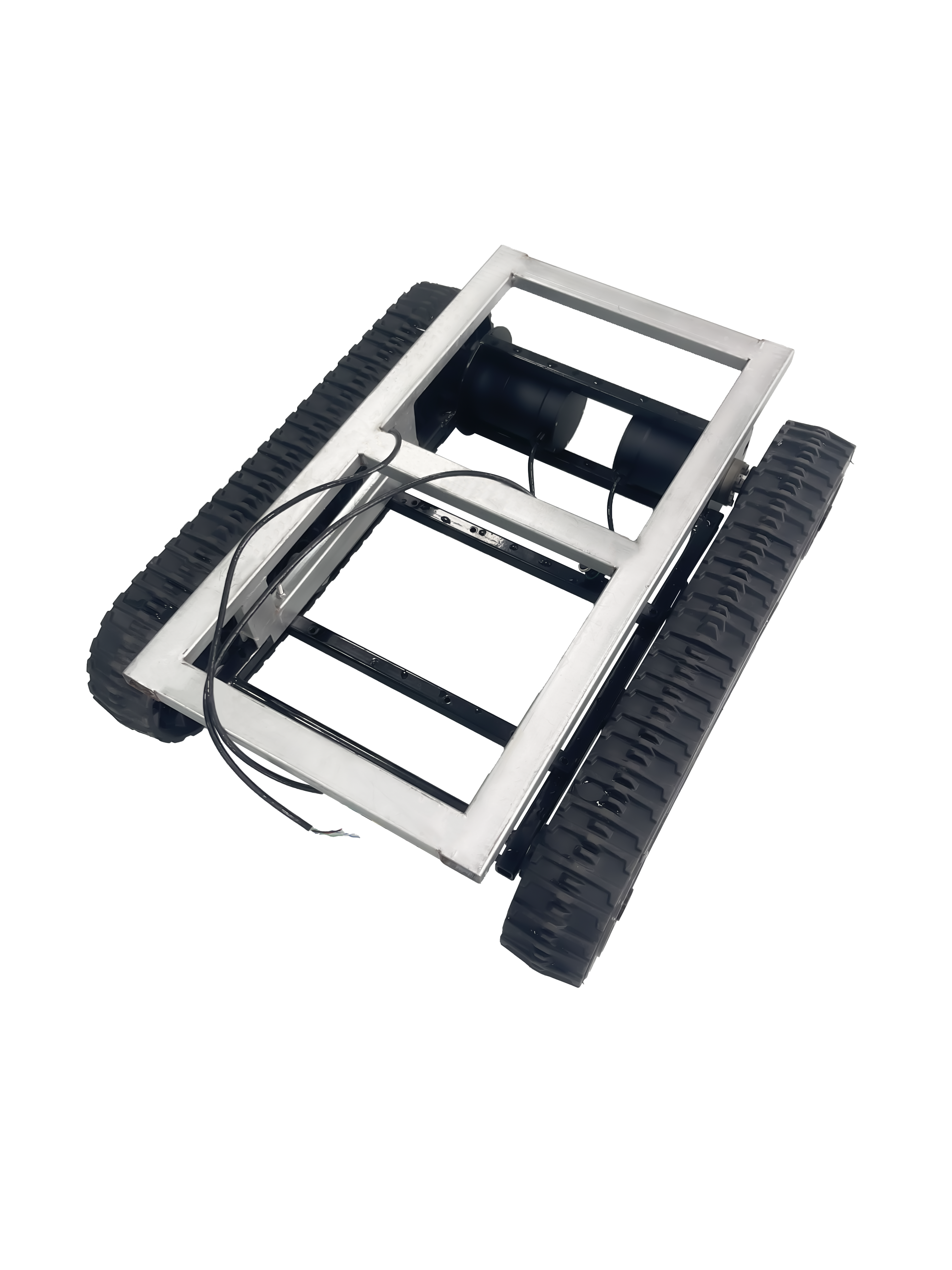
Operating efficiently on sand requires a delicate balance of physics. The ultimate goal is to keep the heavy vehicle floating on top of the substrate rather than aggressively digging into it. Engineers achieve this by focusing strictly on flotation metrics and optimal weight distribution.
The most critical metric for granular environments is Ground Bearing Pressure, known as GBP. You calculate GBP by dividing the submerged weight of the Underwater ROV by the total contact area of its tracks. To prevent the vehicle from burying itself in loose sand, operators must utilize wide-profile track pads. By significantly increasing the width of the tracks, the weight of the vehicle is distributed over a much larger surface area. This drastically lowers the GBP. This structural advantage allows the heavy machinery to float smoothly over the granular surface without breaking through the compacted layers of sand hidden beneath.
A grouser is the protruding steel ridge or cleat on a track pad designed to provide traction. On sandy terrains, deep and aggressive grousers are highly detrimental. Tall treads act exactly like shovels. As the track turns, they scoop the loose sand out from under the vehicle, effectively digging a deep hole that the crawler will inevitably sink into.
Instead, sandy seabeds demand low-profile, closely spaced grousers. Shallow treads provide just enough horizontal resistance to propel the vehicle forward without violently disturbing the substrate. The close spacing ensures a continuous, flat contact patch with the ground. This maximizes the flotation effect and prevents the sand from shearing away under heavy torque.
In contrast to shifting sands, mud and silt stand as the most unforgiving terrains for underwater mobility. Standard flat tracks will spin uselessly, instantly turning the mud into a slick, frictionless slurry. Success in these dark, sticky conditions requires aggressive penetration and intelligent geometric track design.
Mud requires the tracks to violently cut through the unstable top layer. Deep, aggressive single-bar grousers are the undisputed industry standard for cohesive soils. These tall, widely spaced steel bars act like teeth. They penetrate deep into the mud to engage with the firmer, more compacted clay layers beneath. The single-bar design focuses the immense weight of the vehicle onto a very narrow edge. This temporarily spikes the localized pressure, slicing cleanly through the silt to establish a rock-solid anchor point for forward propulsion.
The secondary challenge of navigating mud is accumulation. As the tracks rotate under heavy load, cohesive clay desperately clings between the grousers. If the empty space between the treads fills up entirely, the track effectively transforms into a smooth, flat cylinder. This results in total traction loss.
To combat this phenomenon, engineers utilize self-cleaning track geometries. These specialized configurations feature exceptionally wide gaps between the grousers and angled track shoes. As the drive sprocket turns and the heavy chain bends around the idler wheels, the mechanical geometry naturally forces the accumulated mud to squeeze out through the sides. This continuous, automatic shedding of debris ensures that the steel grousers remain exposed and fully capable of biting into the seabed on every single rotation.
Specifically, operating on hard rock, jagged coral reefs, or uneven bedrock presents an entirely different set of engineering hurdles. In these benthic zones, the primary concern shifts away from flotation and sinkage. The focus turns entirely to abrasion resistance, impact tolerance, and generating sufficient friction on unyielding, slippery surfaces.
When an operation involves heavy-duty offshore mining, deep-sea trenching, or laying thick armored cables across solid bedrock, standard flat tracks will inevitably slip. Seawater acts as a highly effective natural lubricant. It severely reduces the coefficient of friction between a smooth track pad and a smooth rock surface.
To counteract this slippage, engineers deploy heavy-duty steel cleats and hardened rock spikes. These aggressive track profiles are engineered to physically fracture the uppermost millimeter of the rock surface or hook violently into natural micro-crevices. By creating these temporary mechanical anchor points, the drive system can generate massive drawbar pull. The metallurgy here is critical. These cleats are typically forged from high-carbon, heat-treated steel like Hardox to withstand immense point-loading forces. They must resist the continuous abrasive wear caused by grinding against granite or basalt.
While steel cleats offer maximum pulling power, they are completely unsuitable for certain hard-surface applications. In scenarios where the vehicle must operate near sensitive subsea infrastructure, steel tracks pose a severe risk. Traversing over submerged oil pipelines, delicate telecommunication cables, or protected concrete mats with metal cleats can cause catastrophic structural damage or strip away vital anti-corrosion coatings.
In these delicate instances, heavy-duty rubber pads or marine-grade polyurethane tracks become mandatory. Polyurethane offers a high durometer rating, providing excellent cut and tear resistance while maintaining just enough elasticity to conform slightly to the uneven surface of the rock. This micro-conformity dramatically increases the contact patch, generating reliable friction on smooth, wet inclines without leaving destructive scratches. Furthermore, polyurethane tracks absorb impact vibrations far better than raw steel, safeguarding the sensitive electronic payloads housed within the chassis.
Selecting the correct traction system is a complex procurement decision that requires balancing multiple technical specifications. Decision-makers and project engineers must evaluate their operational parameters carefully before finalizing a capital purchase. When procuring an Underwater Crawler Drive Device, several critical criteria dictate whether the system will perform efficiently in the target environment.
The physical weight of the vehicle and its attached tooling directly impacts the type of track grip required. A common, costly engineering mistake is calculating traction needs based solely on the dry weight of the vehicle.
In subsea environments, water buoyancy significantly reduces the effective downward force of the equipment. If a vehicle carries a large buoyant payload, its ground bearing pressure drops, which can lead to a sudden loss of traction on hard surfaces. Conversely, overloading a vehicle with a heavy payload on a small track footprint will cause it to sink rapidly in soft sand. Buyers must ensure the manufacturer provides comprehensive data on the surface area of the track and the resulting Ground Bearing Pressure at various payload capacities.
An aggressive, deep-biting track grip is entirely useless if the integrated drive motors lack the necessary torque to turn the sprockets. Operating in deep mud or thick clay creates immense rotational resistance. As the grousers sink deep into the substrate, the mud packs tightly against the track links, requiring massive torque to initiate movement and clear the heavy debris.
Engineers must rigorously verify the torque output of the drive motors. For instance, industry-leading drive devices designed for extreme benthic environments often feature high-torque, low-speed motor configurations delivering over 5000 Nm of torque. This power curve must perfectly align with the mechanical resistance generated by the chosen track grip. Additionally, modern industrial drive systems are engineered with pressure compensators and rotary shaft seals, achieving depth ratings up to 3000 meters for ultra-deep-sea exploration.
Subsea contractors rarely have the luxury of working in a single type of environment. A project might easily begin on a sandy beach outfall and conclude in a rocky, deep-water trench. Therefore, modularity stands out as a vital purchasing criterion.
Top-tier drive devices feature quick-release track pads or modular chain links. This brilliant engineering allows maintenance crews to easily unbolt wide-profile sand pads and swap them for heavy-duty rock cleats right on the deck of the support vessel between dives. Investing in a modular system prevents the need to purchase multiple dedicated vehicles. This significantly optimizes capital expenditure while maximizing fleet versatility.
Seabed Type | Recommended Track Grip | Primary Engineering Benefit | Potential Drawback |
|---|---|---|---|
Loose Sand | Wide-Profile, Low Grousers | Maximizes flotation, lowers Ground Bearing Pressure. | Reduced pulling power on hard inclines. |
Soft Mud/Silt | Deep Single-Bar Grousers | Penetrates soft layers to find firm substrate; self-cleaning. | High vibration on hard surfaces. |
Hard Rock | Steel Cleats / Rock Spikes | Fractures surface for maximum drawbar pull. | Can damage subsea pipelines or cables. |
Infrastructure | Polyurethane / Rubber Pads | High friction on smooth surfaces; non-destructive. | Faster wear rate on highly abrasive coral. |
For project managers and chief financial officers, subsea equipment represents a massive capital investment. The financial justification for upgrading to specialized, environment-specific track systems lies in the direct, measurable correlation between optimal traction and overall project profitability.
Time is undeniably the most expensive commodity in offshore operations. The daily operating cost of an offshore support vessel, complete with a specialized crew and heavy deployment cranes, can easily exceed tens of thousands of dollars. When a vehicle gets bogged down in mud or slips off a designated trenching path due to improper track grips, the entire operation grinds to a halt.
Extracting a stuck vehicle requires delicate, time-consuming maneuvering, risking severe damage to the equipment and causing cascading project delays. By equipping the vehicle with a track profile precisely matched to the benthic environment, operators ensure consistent transit speeds, highly predictable project timelines, and minimal downtime. The initial cost of purchasing specialized track pads is rapidly offset by the massive savings gained from uninterrupted operational uptime.
Versatility is a massive competitive advantage in the cutthroat offshore contracting sector. Companies that utilize modular drive systems equipped with multiple track grip options can confidently bid on a much wider variety of lucrative contracts.
Whether a client requires delicate environmental sampling in fragile, silty estuaries or heavy-duty cable burial in rocky oceanic trenches, having the correct traction equipment readily on hand demonstrates elite technical competence. It allows contractors to aggressively expand their service offerings without the need to lease expensive third-party equipment. This increases profit margins and solidifies their market position as adaptable industry leaders.
Even the most robustly engineered track systems will eventually fail if not properly maintained. The harsh realities of the marine environment accelerate component wear. Saltwater corrosion, abrasive particulate matter, and immense mechanical stress constantly attack the undercarriage. Implementing strict, uncompromising post-dive protocols extends the lifespan of the equipment and prevents catastrophic failures during critical mission phases.
Immediately upon retrieval to the deck, the drive system must undergo rigorous freshwater flushing. Sand, crushed coral, and microscopic silica particles act as a destructive grinding paste if left inside the track tensioners, idler wheels, and drive sprockets. High-pressure washing removes this abrasive debris and flushes out highly corrosive salt deposits.
During the cleaning process, technicians should meticulously visually inspect the track links for hairline fractures, check the polyurethane pads for deep gouges, and ensure that all fastening hardware remains properly torqued. Additionally, inspecting the sacrificial anodes used for cathodic protection on the drive frame is absolutely essential to prevent galvanic corrosion from eating away at the structural metals.
Proper track tension is paramount for operational efficiency. If the tracks are left too loose, the vehicle risks throwing a track, resulting in complete derailment when turning sharply on uneven terrain. This necessitates a complex and costly subsea recovery. Conversely, if they are too tight, it places excessive radial load on the motor bearings and accelerates the wear of the sprocket teeth. Operators must regularly measure and adjust the tension strictly according to the manufacturer specifications, compensating for the natural stretching of the heavy track chain over time.
Furthermore, engineers must diligently monitor the wear percentage of the grousers or cleats. As the traction profile grinds down against abrasive rock and sand, the pulling capacity of the vehicle decreases exponentially. Establishing a strict replacement schedule based on measured wear limits ensures the vehicle always operates at peak performance, preventing unexpected, costly traction loss on the seabed.
The seabed ultimately dictates the rules of your subsea mobility. Trying to force a single track design to perform across shifting sands, cohesive mud, and jagged bedrock is a recipe for operational delays and extreme financial loss. By carefully matching your track grips to specific underwater terrains, you actively prevent costly project failures and protect your multi-million-dollar assets. Investing in a high-quality, modular crawler drive is an investment in unwavering reliability. It ensures consistent, powerful operational success even in the harshest ocean environments.
While mixed-terrain tracks do exist, they are fundamentally an engineering compromise. For optimal performance, mud requires deep, widely spaced grousers to shed cohesive debris efficiently. Conversely, rock requires either high-friction rubber pads or hardened steel cleats to grip unyielding surfaces. Using mud grousers on solid rock causes severe vibration and component stress, while using flat rock pads in deep mud results in immediate sinking. For diverse missions, you should look for a drive device featuring interchangeable modular track pads.
Traction calculations are highly complex in subsea environments. Engineers must carefully factor in the submerged weight of the vehicle, the shear strength and load-bearing capacity of the specific seabed material, and the hydrodynamic drag caused by ocean currents. Finally, they calculate the required drawbar pull, which is the actual pulling force needed for the vehicle to perform its designated task, such as dragging a heavy plow or pulling a telecom cable across the ocean floor.
The superior material depends entirely on the specific application. Rubber or polyurethane tracks offer excellent grip on smooth, hard surfaces and are mandatory for operating near sensitive pipelines or concrete mats where metal could cause destructive gouging. Steel tracks, however, are vastly superior for deep mud, highly abrasive bedrock, and heavy-duty industrial trenching where maximum durability and deep substrate penetration are absolutely required.
The physical track grip itself is unaffected by hydrostatic pressure. However, the drive device powering it determines the maximum depth rating. Modern industrial drive systems utilize advanced pressure compensators and specialized rotary shaft seals to withstand immense pressure, with depth ratings ranging from 30 meters for shallow surf-zone operations to well over 3000 meters for ultra-deep-sea exploration.
Replacement frequency depends on the abrasiveness of the operational environment and the total transit distance. Operating continuously on sharp coral or granite will wear down polyurethane pads and steel cleats much faster than operating on soft mud. Field engineers should visually inspect the grousers after every dive and establish a replacement schedule based on a specific percentage of material loss, ensuring the vehicle never loses its required drawbar pull during a critical mission.
Yes. While wider tracks significantly reduce Ground Bearing Pressure and prevent sinking in soft sand, they also increase the turning resistance of the vehicle. A wider track footprint requires more torque to execute sharp pivot turns and can cause increased substrate disturbance when rotating. Engineers must balance the need for maximum flotation with the maneuverability requirements of the specific underwater task.
Ready to upgrade your subsea mobility system? Evaluate your project requirements and select the perfect modular drive units for your fleet. Visit https://www.fulldepthrov.com to explore high-performance, depth-rated track configurations and find the exact product to ensure your next offshore mission is a resounding success.


