

WhatsApp:
+8613723476882
E-mail:
E-mail:
A1213 Niulanqian Mansion, Minzhi Blvd, Longhua District, Shenzhen City, Guangdong Province, China
Views: 0 Author: Site Editor Publish Time: 2026-10-29 Origin: Site


Water pressure is unforgiving. A single drop of saltwater can destroy a circuit board in seconds. For engineers and marine operators, finding reliable vision systems is a constant battle against the elements. You do not just need a camera. You need a fortress for your optics. Equipment failure at 300 meters deep means expensive downtime and lost data. This makes the sealing technology of your imaging devices the most critical factor in your entire setup.
The marine technology sector is currently experiencing a massive shift toward remote automation. Aquaculture farms, offshore wind inspections, and deep-sea exploration rely heavily on continuous visual data. Industry trends show a clear move away from bulky analog systems toward high-definition digital solutions. Operators now demand plug-and-play interfaces that can survive months of continuous submersion. This growing need for reliable Marine surveillance camera setups is pushing manufacturers to rethink traditional waterproofing methods. Simple glue and plastic casings no longer meet the standards of modern ocean engineering.
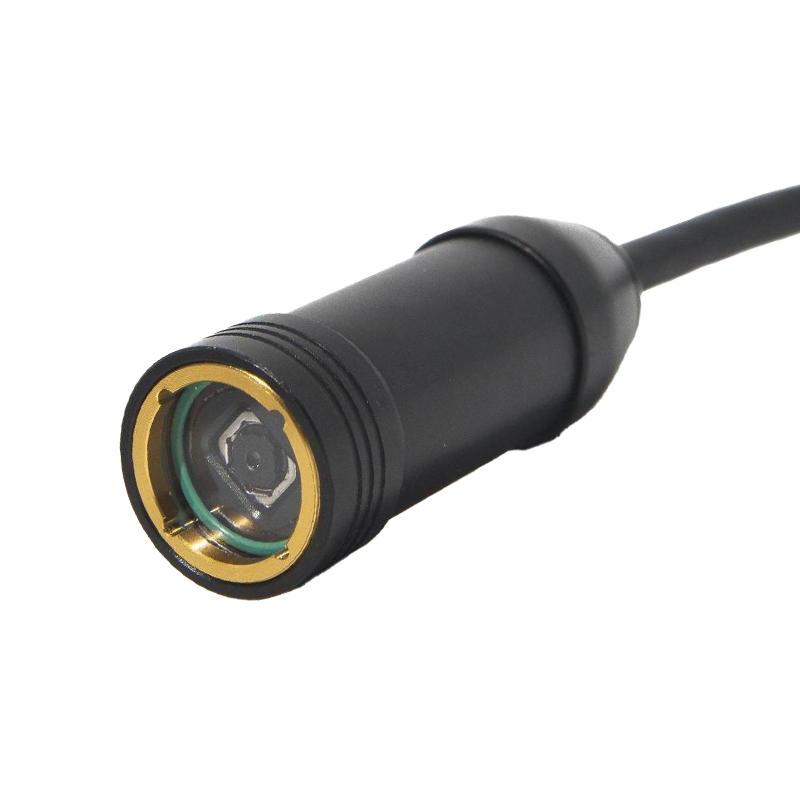
Surviving deep water requires precise mechanical engineering. A truly proven seal relies on a combination of material science and geometric perfection. The foundation of any reliable Waterproof USB Camera lies in its housing design. Machined from solid blocks of hard-anodized aluminum or titanium, these enclosures eliminate weak points found in molded plastics.
Engineers utilize double O-ring configurations for dynamic and static seals. The primary O-ring takes the brunt of the high-pressure environment. The secondary O-ring acts as a failsafe. Furthermore, the optical window must withstand immense force without distorting the image. High-grade sapphire glass is often chosen for its incredible compressive strength and scratch resistance. When these components are compressed together under precise torque specifications, they create an impenetrable barrier against moisture and pressure.
Moving from theory to practice requires looking at actual field data. High-performance units supplied by Fulldepth demonstrate exactly what professional-grade equipment should look like. An 8-megapixel external USB camera equipped with a Sony IMX sensor delivers crystal-clear imaging in the darkest environments. These units are not just splash-proof. They are engineered for serious depth.
Standard models feature a depth rating of 300 meters. For extreme applications, specialized housings push that limit to 1000 meters. The integration of USB 2.0 or 3.0 interfaces allows for rapid data transfer without latency. This plug-and-play capability is crucial for ROV pilots who need zero-delay video feeds. By utilizing robust Underwater camera equipment, operators ensure their visual data remains uninterrupted regardless of the harsh conditions outside the lens.
Understanding the differences in housing materials helps in making an informed decision. The table below outlines the core differences between common underwater sealing strategies.
Housing Material | Depth Rating | Sealing Strategy | Best Application Scenario |
|---|---|---|---|
POM / Marine Plastic | Up to 100m | Single O-ring, Epoxy Potting | Shallow water inspection, Aquaculture |
Hard-Anodized Aluminum | 300m - 500m | Double O-ring, Sapphire Glass Window | Standard ROV operations, Hull inspections |
Titanium Alloy | 1000m+ | Double O-ring, Specialized Bulkhead Connectors | Deep-sea exploration, High-corrosion environments |
Choosing the right unit depends heavily on your specific deployment environment. A mismatched camera will either fail prematurely or waste your budget on unnecessary specifications. You must evaluate your project based on three strict engineering criteria.
First, determine your maximum operational depth. If your ROV dives to 200 meters, a 300-meter rated aluminum housing provides a safe operational margin. Pushing equipment beyond its rated pressure will instantly compromise the O-ring seals. Second, evaluate the cable and connector types. Capillary water ingress through cheap cables is a silent killer of electronics. Ensure your Underwater Camera Systems utilize vulcanized or heavily potted connectors to block water from traveling up the wire. Finally, consider the image quality requirements. An 8-megapixel sensor is ideal for detailed structural inspections, while lower resolutions might suffice for basic navigation.
Seal failure is rarely an instant event. It is usually the result of long-term degradation. Thermal cycling causes materials to expand and contract at different rates, which can slowly loosen mechanical seals. Additionally, UV exposure when the equipment is on the deck can degrade rubber O-rings. Galvanic corrosion is another major culprit. If dissimilar metals are in contact underwater without proper zinc anodes, the housing material will corrode and eventually compromise the sealing surface.
A bare USB connector cannot survive in water. However, the USB protocol works perfectly underwater when housed correctly. The physical USB plug must be kept entirely dry. This is achieved by placing the camera board inside a sealed pressure housing and routing the data wires through a watertight bulkhead connector. The external cable is then spliced and molded to ensure no water can reach the delicate USB pins inside the housing.
Reliability is not a luxury in marine engineering. It is an absolute necessity. Compromising on sealing technology will inevitably lead to project failure and costly equipment replacement. You need vision systems backed by rigorous pressure testing and proven material science. Whether you are conducting shallow aquaculture monitoring or deep-sea ROV inspections, matching the right housing material and seal design to your environment is critical.
Stop risking your operations on unverified equipment. For professional-grade solutions engineered to survive the harshest marine environments, review the technical specifications of your project and select the appropriate gear. You can find a comprehensive range of depth-rated imaging solutions, including 8-megapixel models and 1000-meter rated housings, directly at Fulldepth. Equip your ROV with vision systems that will not blink under pressure.


