

WhatsApp:
+8613723476882
E-mail:
E-mail:
A1213 Niulanqian Mansion, Minzhi Blvd, Longhua District, Shenzhen City, Guangdong Province, China
Views: 0 Author: Site Editor Publish Time: 2026-08-23 Origin: Site


For fire department dive teams and special operations units, underwater recovery and rescue missions represent the highest-risk, lowest-frequency events. During these critical deployments, equipment failure is simply not an option. Your team relies entirely on their gear to survive. They operate in unforgiving environments where minor malfunctions quickly escalate into fatal emergencies. Procuring the right gear goes far beyond basic functionality. It requires aligning equipment capabilities against specific operational environments. You must consider swift water currents, zero-visibility zones, and deep static recovery sites. You must also navigate restrictive municipal budgets carefully. Compliance standards like NFPA and OSHA demand strict adherence.
This guide provides a strategic, decision-stage framework. You will learn how to evaluate, configure, and procure Underwater Search & Rescue Equipment effectively. We will help you ensure absolute mission readiness. Our insights prioritize team safety above all else. You will discover practical ways to avoid common procurement pitfalls. Ultimately, proper configuration saves lives and protects your departmental budget.
Standardized configuration profiles reduce deployment delays and minimize vendor lock-in risks.
Effective equipment evaluation must factor in cross-scenario adaptability (e.g., swift water vs. static vehicle recovery).
Integrating advanced search technology (like handheld sonar) requires corresponding updates to training SOPs to realize ROI.
Procurement strategies utilizing GSA schedules and municipal purchasing frameworks can significantly stretch departmental budgets.
Assess historical call data closely to establish operational baselines. This data determines the primary environments your department faces daily. You might encounter sudden seasonal flooding or rushing swift water rivers. Some jurisdictions deal primarily with murky agricultural ponds. Others face chaotic boating incidents on large lakes. Each environment demands specific and unique capabilities. Look at past incident logs to identify clear seasonal trends. They will guide your primary gear investments accurately.
Ensure your new Underwater Search & Rescue Equipment integrates perfectly. It must work seamlessly alongside existing department platforms. Communication breakdowns cause severe safety hazards underwater. For example, ensure full-face communication masks sync directly to topside radios. Mismatched comms create dangerous isolation during active missions. Evaluate connection protocols and wiring standards before purchasing anything new. Topside commanders must maintain crystal-clear audio contact constantly.
Avoid the massive risk of "Frankenstein" loadouts. Mixing incompatible gear creates deadly confusion during emergencies. Standardizing personal protective equipment across your entire special ops roster is crucial. It drastically reduces cross-training friction among personnel. Furthermore, standardization lowers maintenance overhead significantly. Technicians only need to master one primary system. This uniformity allows any diver to grab a standardized rig confidently in the dark.
Review five full years of deployment records.
Identify the top three aquatic environments frequently encountered.
Audit current topside communication systems for compatibility.
Select standard connections compatible across all response units.
Mandate uniform gear layouts in all response vehicles.
Evaluate your contaminated water diving requirements against standard recovery needs. Often, municipal fire departments face heavily polluted agricultural runoff. They also dive into fuel-contaminated marinas. Decision factors include drysuit material durability. Vulcanized rubber offers superior chemical resistance. It also allows for rapid, effective decontamination procedures. Trilaminate provides better flexibility and lighter weight. However, it risks punctures in debris-filled water. Always verify strict adherence to NFPA 1670 and 1006 standards. These standards dictate acceptable water rescue protection levels for public safety divers.
Compare full-face masks (FFM) against standard regulators carefully. FFM configurations dominate modern rescue diving scenarios. They provide positive pressure capabilities essential for contaminated environments. This positive pressure keeps toxic water out if the seal shifts slightly. They also shield the diver's entire airway from exposure. Consider manifold systems for redundant air supplies. Evaluate the ease of field-servicing versus required factory maintenance. Field-serviceable regulators keep your units active without costly shipping delays.
Examine hardline tethered setups versus wireless acoustic systems. Hardline systems double as physical safety tethers. They guarantee zero line-of-sight limitations in murky water. Hardlines eliminate audio drops caused by underwater obstacles. Wireless systems offer incredible freedom of movement for complex searches. However, they struggle in debris-heavy or thermocline-layered environments. Always check battery life reliability under freezing conditions. Ensure the selected system integrates effortlessly into your standard firefighter radio frequencies. Evaluate push-to-talk (PTT) capabilities against voice-activated (VOX) modes.
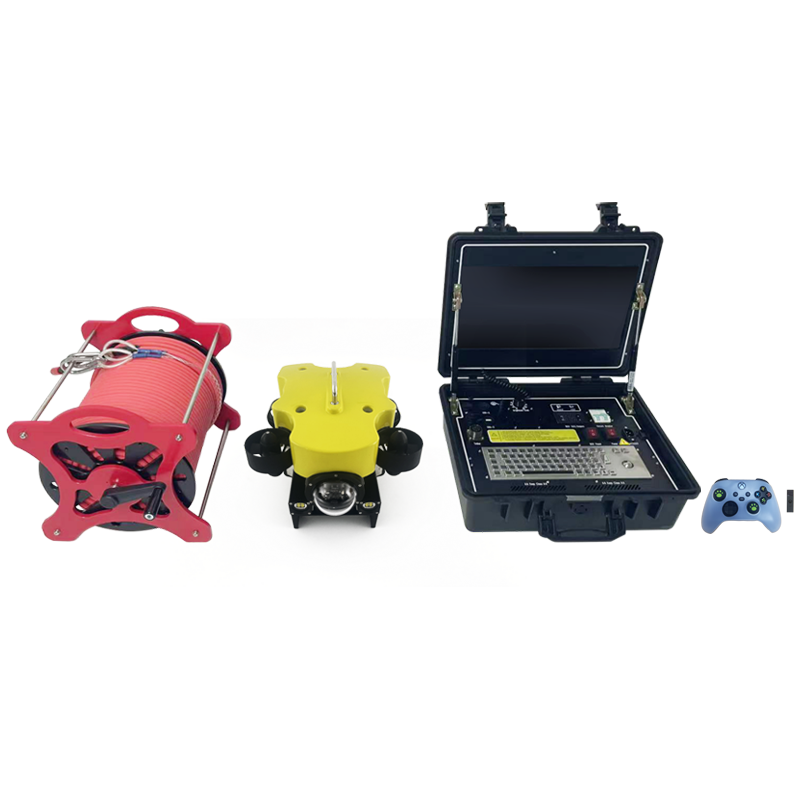
Compare handheld sonar, remotely operated vehicles (ROVs), and traditional grid-search methods. Devices like AquaEye drastically reduce target acquisition times. They scan large volumes of water in minutes. ROVs provide excellent video feedback without risking human divers. They excel in deep or hazardous recovery zones. Traditional grid searches consume massive manpower and physical energy. Consider your minimum visibility requirements when choosing technology. Evaluate false-positive filtering capabilities carefully. Fast deployment times often dictate rescue survival rates.
Technology Type | Deployment Speed | Visibility Required | Ideal Scenario |
|---|---|---|---|
Handheld Sonar | Immediate | Zero Visibility | Rapid surface scanning for targets |
ROV Systems | Moderate | Low to Moderate | Deep or highly hazardous recovery |
Grid Search | Slow | Any Condition | Clearing localized zones manually |
Focus on low-drag profiles during swift water events. Hydrology forces act violently against bulky gear. High-buoyancy personal flotation devices (PFDs) are absolutely mandatory. Equip personnel using breakaway tethers for immediate emergency releases. Provide specialized cutting tools to handle submerged wire entanglements. Avoid traditional heavy scuba gear completely in moving water. Bulky cylinders create lethal snag hazards in fast currents. Opt strictly for swift water-specific PPE. This includes streamlined helmets, reinforced water rescue boots, and specialized throw bags.
Submerged vehicle extrications require immense mechanical advantage. Focus your equipment on heavy-duty underwater lifting bags. Source specialized hydraulic or pneumatic underwater extrication tools. Ordinary tools fail completely under hydrostatic pressure. Secure hardline communications are absolute necessities here. Divers must coordinate flawlessly with topside heavy wreckers. A missed signal during a lift causes catastrophic structural failures. Mud suction drastically increases the lifting force required. Rely on robust Underwater Search & Rescue Equipment designed specifically for heavy recoveries.
Zero-visibility and ice rescue environments demand hyper-specialized gear configurations. Mandatory items include completely enclosed thermal protection systems. You must utilize redundant air supplies like pony bottles. Tethered diver systems keep personnel oriented under solid ice ceilings. Implement high-lumen, low-backscatter lighting arrays. Standard lights blind divers in turbid water by illuminating floating particles. Low-backscatter beams cut through particulate matter efficiently. Ensure all primary regulators possess environmentally sealed first stages. This prevents catastrophic free-flows in freezing temperatures.
Using standard recreational BCDs in heavy current environments.
Deploying wireless communications under thick ice layers.
Failing to stock adequate lift bags for vehicle sizes typically found locally.
Ignoring breakaway capabilities on swift water safety harnesses.
Mixing incompatible drysuit ring systems across team members.
Many departments purchase advanced equipment only to let it gather dust. Purchasing high-end gear fails without immediate practical integration. You must weave new tools into weekly training SOPs. If responders cannot operate devices blindly, the gear becomes useless. Repetition builds the muscle memory necessary for zero-visibility deployments. Teams must simulate high-stress scenarios regularly. This stress inoculation ensures panic does not override technical training. Treat advanced tools as daily essentials rather than specialty novelties.
Evaluate the hidden maintenance burdens tied to specialized gear. Vendor-required certifications for technicians often consume large annual budgets. Maintaining breathing apparatus and drysuits in-house requires highly trained staff. Factor in these mandatory recertification courses when planning. Sending gear back to the factory leaves you vulnerable. Lack of certified in-house technicians sidelines critical life-support equipment quickly. Evaluate whether regional partners can share these maintenance responsibilities effectively.
Build a realistic replacement schedule immediately. Soft goods deteriorate predictably over time regardless of usage. Seals, hoses, and drysuits require frequent scheduled replacements. Hard goods like cylinders, weights, and sonar units last much longer. Proactive depreciation management prevents sudden budget shocks. It ensures your Underwater Search & Rescue Equipment remains deployment-ready year-round. Track usage hours meticulously for every single breathing apparatus. Document all field repairs thoroughly to maintain legal compliance.
Fire departments can leverage pre-vetted GSA schedules easily. This strategy bypasses lengthy and complex RFP administrative processes. It keeps your department fully compliant while saving months of delay. Cooperative purchasing frameworks also pool municipal buying power effectively. They unlock substantial bulk discounts on premium safety gear. Utilize state-level purchasing contracts whenever possible. These contracts ensure vendors already meet rigorous governmental compliance standards. They simplify the acquisition of complex technical equipment.
Structure purchase requests to align properly with federal funding. FEMA and state-level homeland security grants offer massive capital injections. Frame your equipment needs as multi-agency or mutual-aid assets. Regional response capabilities score much higher during competitive grant evaluations. Highlight how your dive team serves neighboring municipalities. Detail how new gear mitigates risks during widespread regional flood events. Emphasize interoperability improvements in your grant narratives. Funding agencies want to see broad community impact.
Look beyond the initial price tag entirely. Assess a vendor's Service Level Agreement (SLA) carefully. Check their access to rapid-replacement loaner gear pools. You cannot afford operational downtime while regulators undergo factory maintenance. Long-term parts availability is incredibly critical. Ensure the manufacturer guarantees spare parts for at least a decade. Ask vendors about their emergency technical support hours. Critical failures often occur during weekend or night deployments. You need reliable vendor support during active crises.
Configuring your response locker is a careful balancing act. You must weigh tactical necessities against harsh environmental realities constantly. Strict municipal budget constraints further complicate these critical choices. Standardizing your Underwater Search & Rescue Equipment ensures reliable deployments. Standardized gear minimizes fatal errors under extreme pressure. We recommend executing a few immediate next steps to improve your readiness.
First, fire departments should conduct a rigorous physical audit. Review your current special operations locker thoroughly. Cross-reference available tools against your primary local incident types. Identify critical capability gaps immediately. Finally, always mandate in-water vendor demonstrations. Testing gear in real-world conditions prevents costly procurement mistakes. Evaluate equipment in the exact environments your team faces regularly. Actionable planning today ensures everyone returns home safely tomorrow.
A: Two primary frameworks dictate equipment selection. NFPA 1670 covers Operations and Training for Technical Search and Rescue Incidents. It defines organizational readiness levels. NFPA 1006 establishes Standard for Technical Rescue Personnel Professional Qualifications. Together, they mandate specific thermal protection, air management redundancies, and baseline safety loadouts required for compliant water operations.
A: Sonar does not replace human divers. Instead, it significantly narrows the initial search grid. This targeted approach drastically reduces a diver's time-in-water. Consequently, it minimizes their physical exposure to hazardous, freezing, or contaminated conditions. Teams deploy divers only when a likely target is acquired, transforming blind grid searches into direct recovery missions.
A: It depends heavily on your incident frequency. Evaluate your annual call volume first. We suggest mutual aid sharing or leasing for low-frequency items like massive vehicle lift bags. Direct ownership remains essential for primary response gear. Basic life-support, personal protective equipment, and daily operational tools must belong to the department for immediate deployment.


