

WhatsApp:
+8613723476882
E-mail:
E-mail:
A1213 Niulanqian Mansion, Minzhi Blvd, Longhua District, Shenzhen City, Guangdong Province, China
Views: 0 Author: Site Editor Publish Time: 2026-08-26 Origin: Site


Marine exploration faces a persistent challenge when observing sensitive underwater habitats. Traditional remotely operated vehicles (ROVs) and autonomous underwater vehicles (AUVs) generate excessive acoustic, visual, and hydrodynamic noise. These invasive disturbances actively skew marine biological data and risk damaging delicate ecosystems like coral reefs. To solve this baseline problem, marine scientists are transitioning from rigid propeller-driven craft toward advanced biomimetic solutions. Achieving true ecological stealth requires tools designed to mimic marine life seamlessly. This article provides marine research directors and environmental agencies with an objective, evidence-based evaluation framework. You will learn how integrating a Bionic Robot Fish enhances targeted scientific deployments. We explore specific design categories, essential payload trade-offs, and critical deployment realities to guide your research initiatives.
Disturbance Reduction: Biomimetic propulsion significantly lowers acoustic and hydrodynamic signatures, enabling close-proximity behavioral observation and micro-sampling.
Design Shift: The emergence of the Intelligent Soft-Bodied Bionic Fish offers superior maneuverability in complex, constrained environments compared to rigid-jointed counterparts.
Payload vs. Performance Trade-offs: Researchers must strictly balance sensor payload requirements (e.g., microplastic filtration, HD optics) against battery endurance and current-resistance limitations.
Deployment Readiness: Successful integration requires evaluating fail-safes, data retrieval protocols, and compliance with local marine protected area (MPA) regulations.
Traditional underwater observation tools suffer from a fundamental flaw. Their operational presence alters the very environment they aim to study. To achieve genuine ecological stealth, we must establish rigorous metrics for what constitutes a "low-disturbance" deployment.
First, we must quantify acceptable acoustic thresholds. Marine species often exhibit flight responses when subjected to unnatural mechanical noise. Propeller-driven AUVs typically generate frequencies that clash with the ambient ocean noise floor. Biomimetic propulsion methods drastically cut these decibel levels. Observing evasive pelagic species requires acoustic signatures that blend perfectly into the natural acoustic environment.
Second, we must evaluate hydrodynamic wake reduction. Standard thrusters churn the water. This artificial turbulence triggers the lateral line sensors of nearby fish, altering their schooling behavior. A properly engineered Bionic Robot Fish replicates the fluid tail-beat kinematics of biological marine life. This natural motion leaves a minimal hydrodynamic footprint, allowing the craft to integrate harmlessly into a local school of fish.
To define success in sensitive research initiatives, project directors rely on specific operational criteria:
Unobtrusive Prolonged Loitering: The ability to maintain a steady position near a subject without continuous thruster adjustments.
Zero-Damage Physical Interactions: The capacity to bump into fragile structures, like coral reefs or underwater cave walls, without causing breakage.
Verifiable Data Integrity: The absolute assurance that the robot's physical presence did not provoke unnatural behaviors in the target species.
The biomimetic underwater vehicle market generally divides into two primary architectural categories. Understanding the mechanical differences helps researchers match the correct platform to their specific scientific payload.
Rigid-jointed models represent the earlier generation of biomimetic design. They utilize segmented plastic or metal bodies driven by internal servo motors. These mechanical joints simulate the undulating motion of a fish tail.
The primary advantage of rigid models lies in their robust payload capacity. The rigid chassis provides ample space for larger batteries and standard sensor suites. Furthermore, engineers can easily seal metal housings against extreme deep-sea pressure. However, these models possess distinct drawbacks. They generate higher mechanical noise due to the internal servos. Their swimming motion appears less fluid than natural fish. Additionally, rigid segments carry a higher risk of snagging in dense kelp forests or underwater debris.
Modern research increasingly leans toward the Intelligent Soft-Bodied Bionic Fish. These advanced platforms ditch mechanical servos. Instead, they rely on artificial muscles, such as dielectric elastomers or fluidic actuators. These actuators sit embedded within flexible polymers like medical-grade silicone.
This design offers exceptional benefits. The soft materials absorb sound, resulting in a near-zero acoustic signature. The flexible exterior also proves highly resilient to pressure impacts. If a soft robot collides with a rocky outcrop, it simply bounces off unharmed. This flexibility allows them to navigate ultra-tight crevices with ease. They also provide natural aesthetic camouflage. However, researchers must account for limited payload volume. You cannot easily mount heavy sonar or bulky sampling equipment inside a flexible silicone body. Maintenance also proves more complex, often requiring specialized patch kits rather than simple wrench repairs.
Design Category | Propulsion Mechanism | Primary Strengths | Notable Limitations |
|---|---|---|---|
Rigid-Jointed Models | Segmented joints driven by internal servo motors. | Higher payload capacity; longer battery life; high pressure resistance. | Mechanical noise; rigid body snags easily; less fluid motion. |
Soft-Bodied Models | Artificial muscles (elastomers) in flexible polymers. | Near-zero acoustic signature; impact resilient; navigates tight spaces. | Strict payload volume limits; complex field maintenance. |
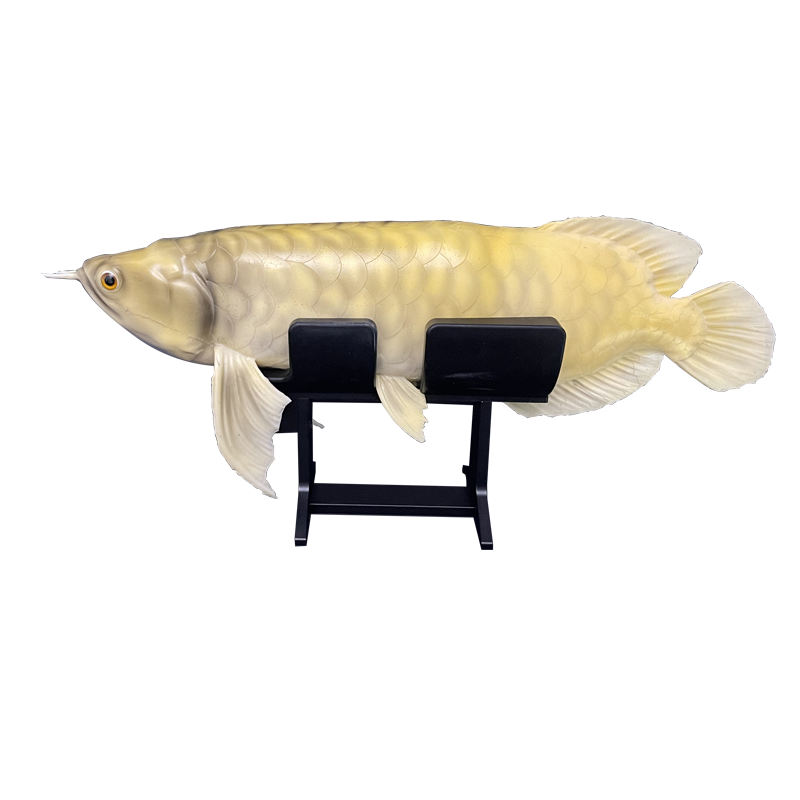
Deploying an effective research unit requires carefully matching your scientific payload to the robot's physical capabilities. Biomimetic propulsion relies heavily on neutral buoyancy and precise weight distribution.
Mounting options dictate the type of research you can conduct. Researchers frequently integrate microplastic detection sensors, dissolved oxygen probes, and salinity trackers. You must carefully assess how payload weight impacts biomimetic swimming efficiency. Heavy sensors drag the tail section downward. This imbalance forces the artificial muscles to work harder, draining the battery prematurely.
Best Practice: Utilize miniaturized, application-specific sensor nodes rather than broad-spectrum commercial suites.
Common Mistake: Failing to recalculate the robot's center of gravity after swapping out sensor modules.
Navigating constrained environments requires advanced algorithmic intelligence. You must evaluate the obstacle avoidance algorithms specifically in zero-visibility scenarios. Deep-sea or turbid environments render standard optical cameras useless. The system must rely on localized acoustic sensing or lateral-line mimicry to avoid collisions.
Researchers must also decide between tethered and untethered autonomous operations. Untethered operation provides maximum stealth. However, you must assess data-link reliability in deep water. High-frequency radio waves do not penetrate seawater effectively. Therefore, autonomous units rely on slow acoustic modems to transmit basic telemetry data back to the surface vessel.
Payload Evaluation Area | Critical Testing Metric | Impact on Biomimetic Performance |
|---|---|---|
Sensor Integration Weight | Center of Gravity Offset | Reduces tail-beat efficiency; accelerates battery drain. |
Autonomous Navigation | Collision Avoidance Speed | Ensures the safety of soft polymer skin in turbid waters. |
Data Transmission Link | Acoustic Modem Latency | Determines real-time command response during untethered dives. |
Oceanic environments relentlessly degrade robotic materials. When utilizing an Intelligent Soft-Bodied Bionic Fish, you must calculate material degradation rates. High salinity combined with surface UV exposure slowly embrittles flexible silicones. Over time, the tail fin may lose its elastic return force. You must also review performance metrics in sub-zero temperatures. Artificial elastomer muscles can stiffen in freezing arctic waters, significantly reducing the robot's top speed.
While biomimetic technology offers unprecedented stealth, it introduces unique operational challenges. Field researchers must adapt their standard deployment protocols to accommodate soft-robotic limitations.
We must acknowledge a harsh reality check. Soft-robotic propulsion currently struggles against strong tidal currents. Standard propeller AUVs can easily fight a three-knot tide. A biomimetic robot fish, relying on undulating tail beats, may stall or drift backward under similar conditions. They excel at low-speed loitering, not high-speed transit.
You can mitigate this risk through intelligent mission planning. Researchers must design drift-compatible mission paths. Instead of fighting the current, program the robot to ride the prevailing tides. You can also leverage localized micro-currents near the seafloor to conserve battery power during long observation windows.
Flexible casings present significant power challenges. You cannot easily fit high-density, block-style lithium batteries inside a curved, bending silicone body. This limits overall battery endurance. Researchers often face a difficult trade-off between mission length and payload activation.
Data retrieval also poses logistical hurdles. Acoustic modems suffer from severe latency delays. You cannot stream high-definition video through water. Therefore, the robot must store high-density data locally. This forces researchers to rely on physical data extraction after the mission concludes. If the robot gets lost, you lose the data entirely.
Maintaining soft robotics requires a shift in technical skills. You cannot simply bolt on a replacement part. Repairing soft-polymer tears on a pitching research vessel requires specialized adhesives and curing times. Furthermore, re-calibrating dielectric actuators demands precise voltage adjustments. Your field technicians will require specialized training to keep these advanced platforms operational during extended sea voyages.
Acquiring biomimetic technology requires a rigorous evaluation process. Because these platforms serve highly specialized functions, standardized procurement checklists often fall short.
Deployment in marine protected areas (MPAs) involves strict oversight. Environmental agencies mandate "Leave No Trace" policies to protect fragile habitats. You must ensure the specific materials utilized in your chosen platform comply with these regulations. Reputable manufacturers use non-toxic, bio-inert silicones. If a predator accidentally bites the robot, or if the unit is permanently lost, the casing must not leach harmful chemicals into the reef ecosystem.
When shortlisting potential manufacturers, you must look past polished marketing materials. Demand concrete evidence of field reliability. Use the following criteria to evaluate vendor capabilities:
Demand Verifiable Field-Test Data: Do not accept lab-tank demonstration videos as proof of capability. Request data logs from actual oceanic deployments involving variable currents and high salinity.
Assess Modularity: Examine the internal sensor bay. Can your team swap the payload easily? A modular design allows you to use the same robot for multi-disciplinary grants, increasing overall utility.
Verify Failure-Recovery Systems: Soft robots carry limited battery reserves. Request detailed documentation on automatic surfacing mechanisms. The unit must possess a fail-safe system that deploys a buoyancy bladder if the main battery dies mid-dive.
The integration of an Intelligent Soft-Bodied Bionic Fish represents a high-value investment for specialized marine research. These platforms shine in scenarios where traditional mechanical disturbance would invalidate biological data. By eliminating acoustic and hydrodynamic noise, they unlock unprecedented access to evasive species and fragile reef structures.
Strategic deployment requires recognizing the technology's distinct operational boundaries. Biomimetic robots do not serve as 1:1 replacements for heavy-duty, propeller-driven AUVs. Instead, view them as precision surgical tools designed for sensitive micro-environments and behavioral marine biology. Their success depends entirely on proper payload balancing and drift-compatible mission planning.
To move forward, initiate dialogues with specialized manufacturers immediately. Provide them with your specific sensor payload requirements and request validated current-resistance testing data. By rigorously evaluating material durability and autonomous fail-safes, you can confidently integrate biomimetic stealth into your next major oceanographic survey.
A: Payload capacity is generally lower. The platform must maintain neutral buoyancy and flexible body mechanics to mimic natural swimming. Therefore, it requires miniaturized, application-specific sensors rather than the broad-spectrum, heavy sensor suites typically found on traditional micro-AUVs.
A: This remains a primary limitation. They cannot fight high-knot tidal streams. Engineers optimize them for low-speed, high-maneuverability loitering in protected ecosystems or deep-sea environments. Researchers must plan mission paths that work with, rather than against, prevailing ocean currents.
A: Radio waves attenuate rapidly in water. Untethered real-time high-bandwidth data transmission, like HD video streaming, is rarely possible. Most systems rely on low-bandwidth acoustic telemetry for basic navigation updates and store high-density data locally for extraction after the mission ends.
A: Reputable manufacturers utilize bio-inert, non-toxic polymers like medical-grade silicone. However, internal batteries and electronic circuits still pose a significant contamination risk. Because of this, redundant fail-to-surface recovery systems are a mandatory requirement for ethical procurement and deployment.


