

WhatsApp:
+8613723476882
E-mail:
E-mail:
A1213 Niulanqian Mansion, Minzhi Blvd, Longhua District, Shenzhen City, Guangdong Province, China
Views: 0 Author: Site Editor Publish Time: 2026-08-20 Origin: Site


Offshore renewable energy is undergoing a massive transformation. We see a definitive shift from reactive subsea maintenance to proactive, data-driven asset lifecycle management. Operators no longer wait for components to fail. They actively monitor subsea infrastructure to predict degradation.
However, inspecting monopiles, jackets, and inter-array cables remains incredibly challenging. High-current, low-visibility environments cause severe operational friction. Inspection teams must capture precise structural data. Simultaneously, they must adhere strictly to statutory safety standards enforced by agencies like BSEE. Traditional diving methods struggle to meet these demands efficiently.
This guide provides O&M directors and subsea engineering leads an evidence-based framework. You will learn how to evaluate, shortlist, and implement an underwater ROV solution tailored for offshore wind. We will help you balance compliance, data integrity, and operational risk reduction. By the end, you can deploy a strategy minimizing weather downtime and maximizing safety.
High-current resistance and six-degree-of-freedom maneuverability are baseline requirements, not premium features, for offshore wind ROV operations.
Transitioning to ROV-based inspections significantly reduces vessel footprint and eliminates human-diver HSE (Health, Safety, and Environment) risks.
Data payload flexibility (HD visual, multibeam sonar, NDT sensors) determines the exact ROI of an ROV by reducing the frequency of statutory inspection cycles.
Successful implementation requires evaluating not just the ROV, but the tether management system (TMS), topside footprint, and data processing pipeline.
Relying on traditional subsea maintenance introduces immense operational burdens. Operators often deploy commercial dive teams for routine inspections. These teams require extensive logistical support. They fundamentally alter the risk profile of offshore wind projects.
Vessel and Personnel Overhead
Commercial divers cannot operate from simple crew transfer boats. They demand large DP2 (Dynamic Positioning Class 2) vessels. These ships bring staggering day rates. Furthermore, diving operations require hyperbaric chambers, medical personnel, and massive deck crews. You are not just paying for the inspection. You are funding a floating industrial complex. In contrast, a modern ROV requires minimal personnel. Technicians deploy compact systems directly from existing Service Operation Vessels (SOVs). This cuts vessel overhead drastically.
Weather Window Limitations
Turbulent waters routinely halt traditional O&M methods. Divers face strict safety thresholds regarding wave height and current speed. Consequently, operators lose precious operational days waiting for calm seas. Specialized subsea vehicles extend these weather windows significantly. Robust thruster configurations allow uncrewed systems to work in rougher conditions. They keep projects on schedule.
To understand the constraints of traditional methods, consider these common bottlenecks:
Strict standby requirements for divers delaying immediate deployment.
Heavy reliance on specialized heavy-lift vessels for minor subsea tasks.
Restricted dive times at deeper inter-array cable depths.
Inconsistent data collection dependent on a single diver's perspective.
Compliance Pressures
Regulatory bodies demand rigorous asset oversight. BSEE and global equivalents mandate verifiable baseline data. Operators must regularly report on scour protection, anode depletion, and weld integrity. Human divers provide qualitative visual assessments. However, regulators increasingly expect quantitative, auditable datasets. Uncrewed subsea systems meet these rigorous documentation standards effortlessly.
Selecting the right equipment requires looking past basic marketing specifications. Offshore wind environments demand industrial-grade resilience. You must evaluate hydrodynamic performance, payload adaptability, and autonomous intelligence.
Offshore wind foundations disrupt natural tidal flows. This disruption creates turbulent splash zones around monopiles. Subsea vehicles must maintain stable station-keeping in these chaotic currents. Active stabilization is absolutely necessary. Multi-directional thrust allows the vehicle to hold a precise position while scanning a weld.
When evaluating hydrodynamics, look beyond theoretical thrust metrics. Laboratory thrust numbers rarely translate directly to the ocean. Instead, demand verified data on maximum operational current limits measured in knots.
Current Speed (Knots) | Impact on Subsea Vehicle | Required Capability |
|---|---|---|
0.0 - 1.5 | Mild drift. Easy navigation. | Basic lateral thrust. Standard station-keeping. |
1.5 - 2.5 | Moderate turbulence. Positioning becomes difficult. | Active stabilization. Pitch/roll control. |
2.5 - 3.5+ | Severe vortex shedding around monopiles. | Six-degree-of-freedom movement. High-output vector thrusters. |
An underwater inspection platform is only as useful as its sensors. Wind farm operators need deep insights into structural health. A modular payload architecture allows you to swap sensors based on specific mission profiles.
Visual & Acoustic Integration
Visual clarity is paramount. Regulators expect 4K low-latency video. Additionally, teams utilize 3D photogrammetry to map foundation degradation accurately. In low-visibility waters, optical cameras fail. Multibeam sonar becomes critical here. It enables reliable inter-array cable tracking when silt clouds the water.
Non-Destructive Testing (NDT)
Beyond looking at structures, you must test them. Modern platforms integrate Cathodic Protection (CP) probes. They carry ultrasonic thickness gauges to measure steel corrosion. Some even deploy cavitation blasters to clean marine growth off critical welds.
A crucial evaluation lens is the power architecture. Heavy-duty NDT payloads draw massive amounts of electricity. Can the vehicle power a cavitation skid without losing its ability to fight a 3-knot current? Assess the power budget carefully before purchasing.
Inspection Target | Essential Payload | Operational Consideration |
|---|---|---|
Weld Integrity | 3D Photogrammetry & 4K Video | Requires high-lumen, dimmable LED arrays. |
Corrosion / Anodes | CP Probes & Ultrasonic Gauges | Vehicle must maintain physical contact with the structure. |
Buried Cables | Multibeam Sonar & Cable Trackers | Needs precise acoustic integration to avoid signal noise. |
Marine Growth | Cavitation Cleaners / Rotary Brushes | Demands substantial topside power delivery via tether. |
Piloting in turbulent water exhausts human operators. Fatigue leads to mistakes and degraded data quality. Autonomous capabilities solve this problem. Dynamic positioning holds the vehicle steady against sudden current shifts. Automated waypoint tracking allows the vehicle to orbit a monopile perfectly. It captures standardized, repeatable data across multiple inspections. These intelligent navigation systems reduce pilot workload. They ensure every inspection cycle yields uniform baseline data.
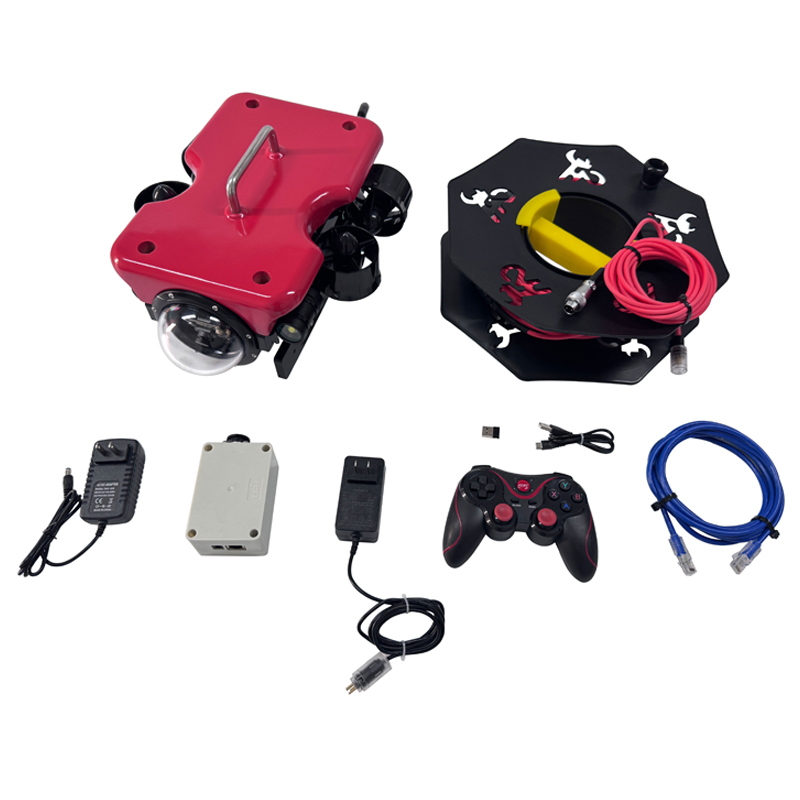
Offshore wind farms operate under strict regulatory frameworks. Agencies like BSEE do not just request inspections. They demand empirical proof of structural safety. Subsea robotics bridge the gap between ocean operations and regulatory compliance.
Meeting Regulatory Thresholds
Modern subsea data outputs map directly to statutory reporting requirements. Regulators assess structural integrity and environmental impact continuously. By deploying a specialized ROV, operators gather precise metrics on scour development. They track exact marine growth volumes. This granular data satisfies complex regulatory thresholds far better than subjective diver reports.
Data Verifiability
Regulators reject ambiguous data. They require timestamped, georeferenced datasets. Acoustic positioning systems, like USBL (Ultra-Short Baseline), pinpoint exact subsea coordinates. When you detect a microscopic weld fracture, USBL tagging ensures you can find it again next year. This verifiability allows engineers to build auditable models of foundation degradation over time. You transition from guessing about corrosion to proving its exact rate.
Risk Mitigation
Compliance also encompasses personnel safety. Transitioning to uncrewed systems fundamentally reduces corporate HSE liability. Removing humans from hazardous underwater environments is the ultimate risk mitigation strategy. It aligns perfectly with modern corporate governance mandates. Regulators favor operators who proactively minimize human exposure to high-risk subsea tasks.
Procuring a capable vehicle is only the first step. Real-world implementation presents unique logistical hurdles. You must integrate the system into your existing O&M workflow smoothly.
Tether Management in Complex Structures
Offshore wind foundations are complex. Jacket structures present a maze of cross-bracing steel. Tether entanglement is a severe operational risk. A snagged cable halts the entire mission. Therefore, you need a robust Tether Management System (TMS). A TMS acts as an underwater garage. It lowers safely to the working depth before deploying the agile flyer. This minimizes the amount of loose cable floating in the water column. It dramatically reduces entanglement hazards.
Topside Integration
Deck space is premium real estate. You must evaluate the required topside footprint. Consider the winch size, control station dimensions, and power supply integration. Can your existing Crew Transfer Vessels (CTVs) support the load? Or will you need larger Service Operation Vessels (SOVs)? Compact systems draw power from standard vessel generators. Heavy-duty work-class setups might require dedicated deck generators. Plan this integration early to avoid vessel retrofitting costs.
Training and Adoption
Technology requires skilled operators. You must decide whether to upskill existing crews or hire third-party service providers. Upskilling offers long-term flexibility. However, it requires realistic training timelines. Crews must learn to pilot the vehicle, manage tether tension, and process massive sonar datasets. Many operators adopt a hybrid approach. They hire specialists for complex annual surveys. Meanwhile, they train internal staff for rapid, ad-hoc visual inspections after severe storms.
Moving from theory to procurement requires a structured approach. O&M teams should adopt a rigorous shortlisting framework. This ensures the chosen solution actually performs in your specific lease area.
Define Success Metrics
Never implement new technology without baseline KPIs. You must define what success looks like. Common metrics include:
Reduction in the average cost per foundation inspected.
Decrease in weather-related downtime days.
Increase in the volume of georeferenced data points collected per hour.
Improvement in turnaround time for regulatory reporting.
Vendor Due Diligence
Hold vendors accountable to their marketing claims. Demand case studies featuring verifiable operational data. Ensure these case studies match your specific sea states. A vehicle that performs well in the calm Mediterranean might fail in the turbulent North Sea. Ask vendors for raw USBL track logs demonstrating station-keeping in 2.5-knot currents. Scrutinize their power budget calculations for simultaneous NDT payload usage.
Proof of Concept (PoC)
Avoid fleet-wide scaling without testing. We highly recommend structuring a targeted pilot program. Focus the PoC on a single challenging asset. Choose one offshore substation or a complex inter-array cable segment. Validate payload performance and current resistance in the real world.
Follow these steps for a successful PoC:
Select a high-current foundation known for rapid marine growth.
Deploy the system during a marginal weather window to test operational limits.
Run simultaneous visual and sonar scans to stress-test the data pipeline.
Compare the resulting digital twin model against legacy diver reports.
A complete offshore wind ROV solution is far more than a simple underwater camera. It operates as a mobile, highly intelligent subsea data-acquisition platform. Deploying the right system ensures statutory compliance while keeping personnel safe. It transforms unpredictable maintenance schedules into stable, data-driven workflows.
Moving forward, operators should prioritize hydrodynamic stability and payload modularity. Establish strict KPIs before engaging vendors. Demand evidence of performance in aggressive sea states. Finally, schedule a technical consultation or request a detailed specification sheet customized for your site’s specific hydrodynamic conditions. Securing your subsea assets today guarantees long-term operational profitability tomorrow.
A: Theoretical specs often claim up to 4 knots. However, real-world station-keeping in turbulent splash zones usually tops out around 2.5 to 3 knots for inspection-class vehicles. Beyond this, operators need heavy work-class systems or active heave compensation to maintain stable, precise payload positioning.
A: Yes, but power distribution is critical. Compact systems face power constraints. Simultaneous use of cavitation blasters and CP probes requires a modular skid with optimized power routing. Ensure your vehicle's umbilical can deliver sufficient topside voltage without sacrificing thruster performance.
A: Modern subsea vehicles export georeferenced datasets natively. They push 3D photogrammetry models and point-cloud sonar data through open APIs. This allows engineers to ingest the structural data directly into existing digital twin platforms, creating accurate historical timelines of asset degradation.
A: Statutory inspection frequencies are generally set by regulators like BSEE regardless of the method. However, uncrewed systems allow operators to conduct cheaper, interim risk-based inspections after storms. This provides higher confidence between mandated regulatory cycles without exposing divers to hazardous conditions.


